
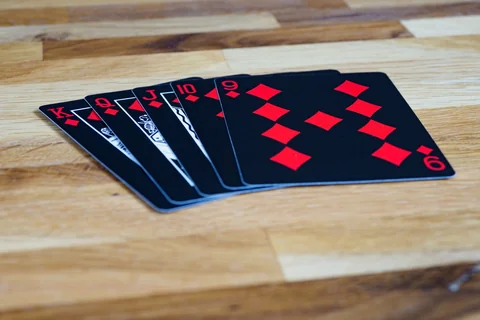
Photo: Brett Jordan · Source & licence

Sets and sequences are the building blocks of the common 13-card Indian Rummy format used in these lessons. Learn to explain a group by its ranks and suits, rather than by the way cards happen to sit next to each other on screen.
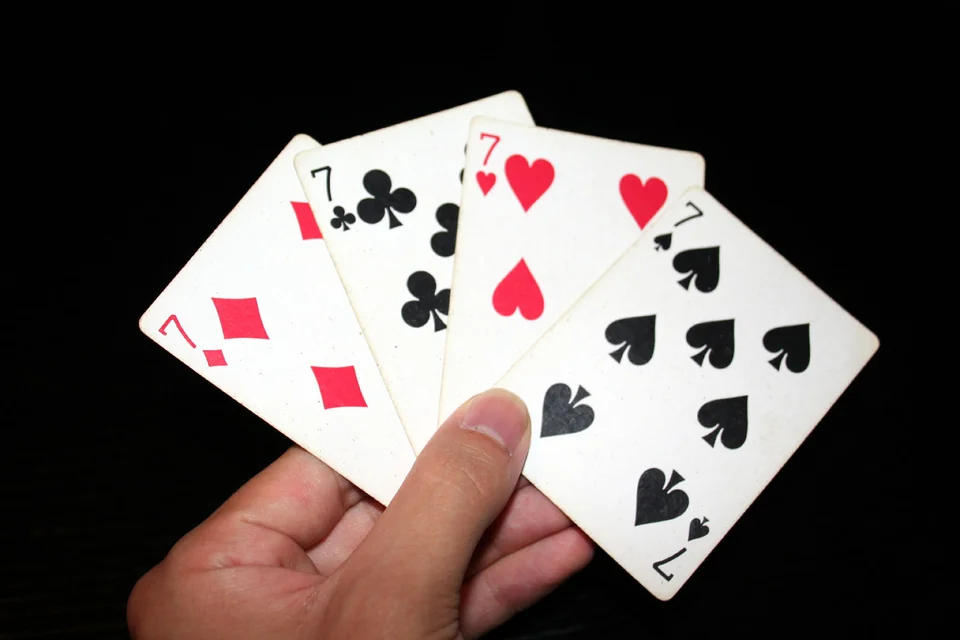
For a sequence, ask: do the ranks continue in order within the same suit? For a set, ask: do the ranks match, using different suits? In the examples here, a group needs at least three cards.
| Example | What it forms |
|---|---|
| A sequence: consecutive hearts | |
| A set: eights in three suits | |
| Neither: the middle suit breaks the sequence |
Card colour is not a substitute for suit. Hearts and diamonds are both red, but they are different suits. Clubs and spades are both black and are also different suits.
Read the ranks aloud from left to right. With 6, 7, and 9 of spades, you should notice the missing 8. Three matching suit symbols alone do not make a run.
Adding 8 of spades would make a four-card sequence. Alternatively, an allowed joker could represent that missing card, making an impure sequence. Merely moving 9 beside 7 does not fix the gap.
In the ace convention used here, A-2-3 and Q-K-A of one suit are valid orders. K-A-2 is not: an ace cannot connect the high and low ends in one run. Check your table's ace convention when changing variants.
A natural set commonly contains three or four cards of one rank, each with a different suit. Four suits provide four distinct natural positions.
Now consider two queens of hearts and a queen of clubs. Multiple packs can make those physical cards available, but the repeated heart does not create a second suit. Under the rules in this lesson, that group is not a valid natural set.
Some house rules allow larger groups involving extra jokers. Do not extend the natural four-suit example into a universal rule for every joker-assisted set. Check the permitted group size first.
Try arranging these five cards:
You can see a diamond sequence and a possible set of eights, but both need the same 8 of diamonds. Five physical cards cannot become two separate three-card groups.
There are several possible repairs. Drawing 8 of spades lets you keep 6-7-8 of diamonds and form a separate set with the other three eights. Drawing 5 of diamonds instead lets you use 5-6-7 as the run and all three original eights as the set. These are illustrative possibilities, not predictions about the next draw.
In this 13-card format, completing sets alone is insufficient. The finished hand must include at least two sequences, with at least one pure. Keep a separate count of sequence groups instead of counting every completed group as equivalent.
For a short practice exercise, sort six cards into two groups, explain each group, and verify that no card appears twice. Then increase to 13 cards. If a joker is involved, name the exact card it replaces; the joker guide demonstrates that check.
This approach separates three different errors: an invalid group, a shared card, and a hand missing a required sequence. Identifying which error occurred makes the next correction much easier.
They are a pair, not a complete set under the rules explained here. A third permitted card is needed.
Yes. A sequence can contain more than three cards when the ranks remain consecutive and the suit remains consistent.
Examples and explanations are written for this guide. Check the linked rules and your chosen game’s own instructions for variations.
Photo: Brett Jordan · Source & licence
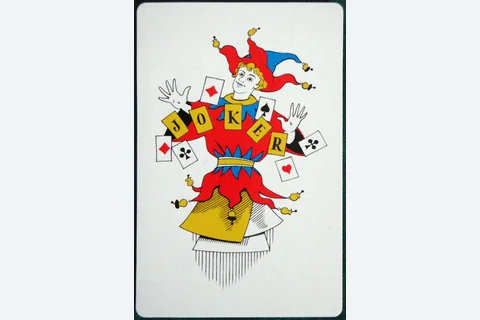
Photo: Teuxe; cropped and perspective-corrected by Hohum · Source & licence
Have a correction? Prepare a feedback note. How we handle sources.